Tight Spaces, Big Ideas: The Micro-Venue Theatre Scene Taking Over Britain's Unexpected Corners

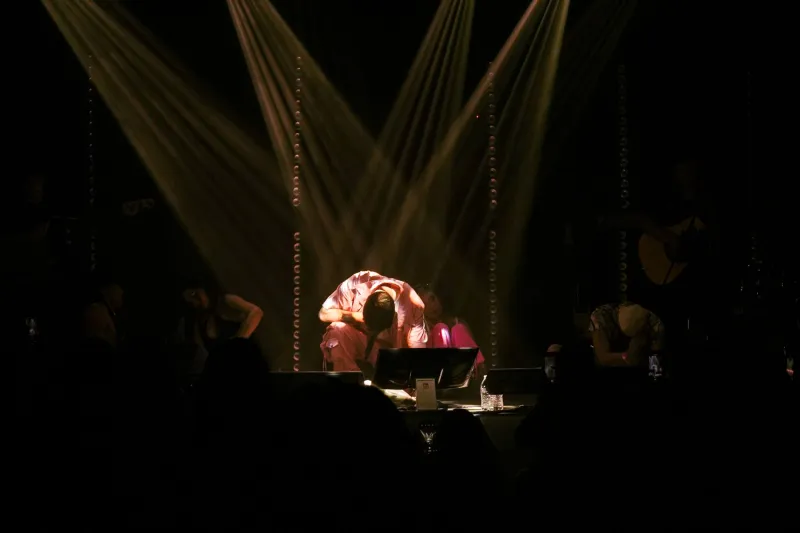
Photo by Photo by Bruno Martins on Unsplash on Unsplash
Let's talk about proximity. Not as a concept, but as a physical fact: the experience of sitting close enough to a performer that you can see the sweat on their forearms, hear the slight catch in their breath before a difficult line, notice the tiny involuntary twitch of a hand during a moment of suppressed emotion. That's not available at the Barbican. It's not happening at the Crucible or the Lyceum. But in a railway arch in Bermondsey, a repurposed textile mill in Halifax, or a seventy-seat black box above a Hackney pub, it's the whole point.
Micro-venue and site-specific theatre has been building quietly for years, but something has shifted recently. These intimate, unconventional spaces aren't just surviving on the margins of British theatre culture — they're thriving, attracting committed audiences, and producing work that larger institutions simply cannot replicate. Here's your guide to understanding why, and where to find the best of it.
Why Small Spaces Do Things Big Ones Can't
The conventional theatre building carries a lot of ideological baggage. The separation between performer and audience — the darkened house, the lit stage, the invisible fourth wall — is a set of choices that became so normalised they started to look like natural laws. They aren't. They're design decisions with histories, and they produce specific kinds of theatrical experience: one where the audience is fundamentally passive, consuming a performance delivered from a safe distance.
Micro-venues and site-specific spaces break that contract immediately, simply by virtue of their physical reality. When there are forty people in a room and the performers are moving through the same space, the old rules stop applying. Audiences become spatially implicated in the action. The performer's gaze can actually land on you — not as a theatrical convention, but as a real human moment. The work has to account for the fact that you're there, breathing, reacting, taking up space.
This changes what theatre can be about. Intimacy of scale enables a kind of emotional and political directness that evaporates in a 500-seat house. It also, usefully, levels the playing field: a company working in a micro-venue doesn't need a production budget that would frighten a small nation. What they need is a good idea and the nerve to execute it.
A Quick Map of Britain's Unconventional Spaces
If you're not sure where to start, here's a rough orientation.
London remains the densest ecosystem for this kind of work. The Yard Theatre in Hackney Wick — housed in, yes, a yard — has built a reputation for producing and nurturing experimental work in a flexible, low-tech space that feels genuinely alternative. The Bunker in Borough (currently navigating its own future) has been a vital home for political and formally adventurous work. Further afield, Battersea Arts Centre's warren of Victorian rooms has long been a playground for site-responsive making.
Manchester's HOME theatre has a smaller studio space that regularly hosts intimate, challenging work, but the more interesting stuff often happens in the city's unofficial venues — empty shops during festival periods, industrial spaces in Ancoats, the upstairs rooms of Northern Quarter pubs that have been hosting theatre since before it was fashionable.
Bristol has a particularly strong culture of site-specific work, partly driven by the presence of Arnolfini and a network of artists who've been working with unconventional spaces for decades. The city's geography — all those Georgian terraces, converted industrial buildings, and surprising courtyards — lends itself naturally to work that treats architecture as a collaborator.
Edinburgh during the Fringe is, of course, the annual explosion of micro-venue culture: broom cupboards, converted churches, the back rooms of venues that don't exist for the other eleven months of the year. But the interesting development is that Edinburgh's appetite for this kind of work is starting to sustain year-round activity rather than just the August circus.
The Practical Challenges Nobody Mentions
It would be dishonest not to flag the difficulties. Running or performing in a micro-venue is genuinely hard in ways that go beyond the artistic.
Accessibility is a real and serious issue. Many unconventional spaces — particularly older industrial buildings and pub venues — were not designed with disabled audiences in mind. Steps, narrow doorways, uneven floors, poor acoustics for hearing aid users: these are not minor inconveniences, they're barriers that exclude people from work that's supposedly democratising theatre. The most thoughtful companies working in unconventional spaces are actively grappling with this, but the sector as a whole has a significant way to go.
Temporary and pop-up venues also create instability for the companies that use them. A beloved railway arch space can disappear overnight when the lease ends or the landlord decides the rent can go to a coffee chain instead. The churn of London's venues in particular has been brutal: spaces that took years to build communities around, gone in months. This isn't just inconvenient — it actively undermines the kind of long-term relationship between venue and audience that makes experimental work sustainable.
There's also the question of what intimacy costs performers. Working in close proximity to audiences, often without the protection of technical distance — no elaborate lighting rigs, no sound design to hide behind — demands a particular kind of exposure. That can be creatively exhilarating. It can also be exhausting, and the sector doesn't always do enough to support the wellbeing of artists working in these conditions.
What Audiences Get Out of It
Here's the thing about seeing theatre in a space that wasn't built for theatre: it makes you notice the act of watching. When you're sitting on a folding chair in a converted factory and a performer walks past close enough to brush your shoulder, you become aware of your own presence in a way that a conventional theatre seat never quite achieves. You're not an audience member in the traditional, slightly passive sense. You're a witness. Sometimes a participant. Always, in some way, implicated.
For audiences who've felt that mainstream theatre isn't quite speaking to them — who find the rituals of the traditional playhouse faintly alienating, the work too polished, the distance too comfortable — micro-venues offer something genuinely different. Not just different work, but a different relationship to the work.
The growth of this scene isn't just an artistic trend. It reflects a real hunger, particularly among younger audiences, for cultural experiences that feel alive and contingent rather than packaged and safe. Theatre in a tight space, made by people who chose that space deliberately, tends to feel like it has something at stake. And that, more than any production value or prestigious venue name, is what keeps people coming back.
Find your nearest unconventional space. Sit in it. Let the work happen close enough to matter.