Don't Panic: Your No-Nonsense Guide to Participatory Theatre (And Why Getting Involved Is Actually Brilliant)

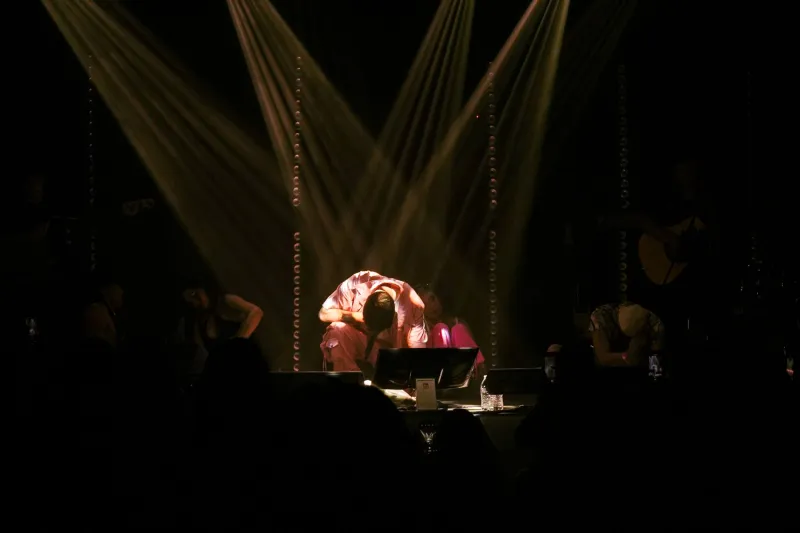
Photo by Photo by Phil Hearing on Unsplash on Unsplash
Let's be honest. When someone mentions 'audience participation', a very specific and deeply unpleasant image tends to materialise in the brain. A pantomime villain pointing directly at you. A stand-up comedian who's clocked your nervous energy from across the room. A corporate away-day facilitator with a foam ball and absolutely no mercy.
Small wonder, then, that the phrase 'participatory theatre' makes even enthusiastic theatre-goers go slightly pale.
But here's the thing: that's not what this is. Not even close. And if the fear of being put on the spot has been keeping you away from some of the most genuinely thrilling performance work happening in the UK right now, this guide is for you.
So What Actually Is Participatory Theatre?
At its simplest, participatory theatre describes any performance in which the audience isn't just watching — they're somehow involved in what's happening. But that involvement exists on a vast spectrum, and understanding where on that spectrum a given piece sits is the key to managing your expectations (and your anxiety).
On one end, you have work where 'participation' simply means you're not sitting in a fixed seat in the dark. You might move through a space, choose which performer to follow, or make decisions about where the story goes next. You're active, but nobody is asking you to speak or perform.
Further along the spectrum sits work where you might be invited into a one-on-one encounter with a performer, asked to share something personal, or given a role within the narrative. This is more exposing — but also, for many people, more transformative.
At the far end sits work where you are genuinely co-creating the piece, where your choices and responses fundamentally shape what happens. This is rarer, and usually involves a level of consent and preparation that good companies take very seriously.
Why Is This Happening Now?
Participatory and immersive performance isn't new — its roots run deep through the history of avant-garde theatre, from the happenings of the 1960s to the community theatre movements of the 70s and 80s. But it's having a particular cultural moment right now, and it's worth asking why.
Part of the answer is generational. Younger audiences have grown up with media they can interact with — games, social platforms, choose-your-own-adventure content. The idea of sitting passively in front of a story for two hours feels increasingly strange to people whose relationship with narrative has always been interactive.
But there's also something deeper going on. In an era of screens and remote connection, the hunger for genuine shared physical experience has intensified. Participatory theatre offers something algorithms genuinely cannot: the irreducible, unpredictable reality of being in a room with other human beings, where what happens next is not predetermined.
"People are exhausted by consumption," says one practitioner whose company runs participatory work across community venues in South London. "They want to make something. Even if it's just a small decision in a room with a stranger, that act of agency feels radical right now."
The Psychology of Getting Involved
Here's what's interesting: research into audience experience consistently finds that the discomfort people anticipate before participating is almost never matched by their actual experience during and after it.
The dread is real. The embarrassment, in practice, usually isn't.
This is partly because good participatory work is designed with enormous care around consent and psychological safety. The best companies in this space are expert at creating conditions where risk feels manageable — where you're nudged rather than shoved, invited rather than conscripted.
It's also because the social contract in a participatory space is fundamentally different from everyday life. Everyone in the room knows they're in a performance context. The normal rules of embarrassment don't quite apply in the same way. There's a collective permission that makes things possible that wouldn't be outside the theatre.
And then there's the other side of it: when participation works, it works in a way that nothing else does. The moment you realise your choice has genuinely altered what's unfolding in front of you — that this story couldn't exist without your presence in it — is a feeling that's very hard to replicate.
Five Participatory Productions Worth Seeking Out in the UK
1. Anything by Punchdrunk The grand-daddies of immersive performance in this country. Their work is large-scale, atmospheric, and largely self-directed — meaning you choose what to follow and when. Perfect for participatory beginners because the level of engagement is entirely in your hands.
2. You Me Bum Bum Train A legendary immersive experience that's been running in various forms for years and consistently produces the most intense audience responses of anything on the UK scene. You go through alone. That's all we'll say. Find it and go.
3. Shunt Collective's Archive Work (and their successors) Shunt's legendary venue beneath London Bridge may be gone, but the artists who came through it are scattered across the city making extraordinary things. Keep an eye on their individual projects.
4. Local Scratch Nights and New Work Nights Some of the most adventurous participatory work happens in small venues with under 50 seats. Camden People's Theatre, Battersea Arts Centre's scratch programmes, and similar spaces regularly platform work that's genuinely pushing at the edges of what audience involvement can mean.
5. Site-Specific Promenade Work at Festivals The Edinburgh Fringe, LIFT (London International Festival of Theatre), and Spill Festival all regularly programme participatory work that ranges from the gently interactive to the genuinely boundary-dissolving.
Practical Advice for the Participation-Anxious
Read the show notes carefully. Good companies are transparent about what level of involvement is expected. If a production involves one-on-one encounters or asks you to speak, it will usually say so. If you're unsure, email the company — they'll tell you.
Wear comfortable clothes and shoes. For anything immersive or promenade, you may be standing or moving for the entire duration. Heels and a tight blazer are not your friends.
You can almost always say no. The vast majority of participatory work operates on genuine consent. If a performer invites you to do something and you'd rather not, a quiet shake of the head is usually all it takes. Nobody will make a scene.
Let yourself be surprised. The instinct to manage and anticipate your experience is natural but counterproductive here. The best participatory theatre happens in the gap between what you expected and what actually occurred. Try to stay in that gap.
Go with someone, but be prepared to separate. Immersive work often splits groups up, which can be disconcerting if you're not ready for it. Agree a meeting point beforehand and then let yourselves drift. You'll have much better stories to compare afterwards.
The Bottom Line
Passive spectatorship isn't going anywhere. There will always be a place for sitting in the dark and letting a story wash over you — and thank goodness for that.
But if you've never let a performance ask something of you in return, you're missing one of the most genuinely alive things theatre can do. The nervousness is normal. The awkwardness is part of it. And on the other side of both, more often than not, is something you won't stop thinking about for weeks.
That's what we're here for.