Smashing the Proscenium: How London's Independent Theatre Scene Is Tearing Up the Old Rules
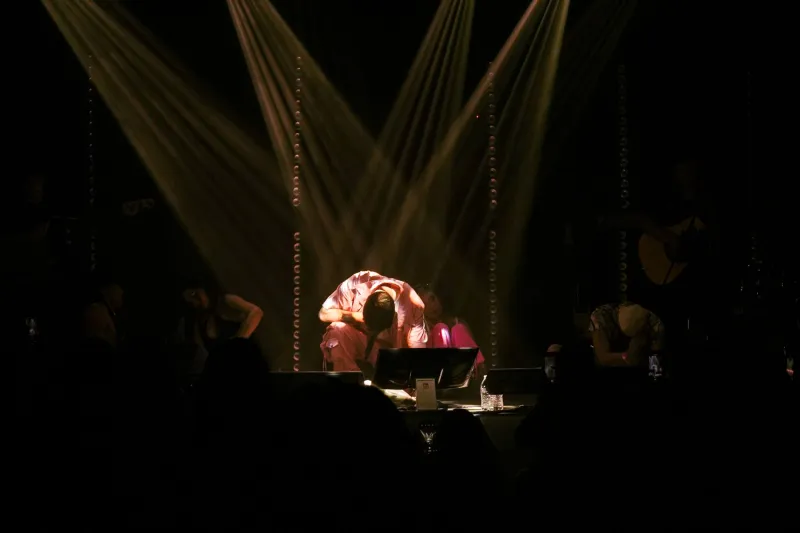
There's a particular kind of silence in a West End theatre just before the curtain rises. It's expectant, yes — but it's also obedient. Everyone knows their role. You sit down, you shut up, you watch. The story happens over there, safely contained behind an invisible wall, and you receive it like a parcel delivered to your door. Neat. Predictable. Comfortable.
And for a growing number of theatre-makers and audiences across London, that comfort has become the problem.
The Rulebook Nobody Admits Exists
Traditional British theatre runs on a set of unspoken laws so deeply embedded they're practically architectural. The audience faces the stage. The narrative moves in a straight line. The fourth wall holds. Characters don't acknowledge you're there. You clap at the end. You go home.
These aren't inherently bad rules — centuries of extraordinary work has been made within them. But rules only stay useful for as long as they serve the art. And right now, a generation of independent companies is making a compelling case that those conventions are actively getting in the way.
"We kept asking ourselves what theatre needs to do that a film or a podcast can't," says one director working out of a repurposed industrial space in Deptford. "The answer was always the same: presence. Shared, unpredictable, embodied presence. And then we'd look at the traditional staging model and realise it was doing everything it could to suppress exactly that."
Case Study: When the Story Refuses to Stay Still
Take the work of companies like Punchdrunk, whose influence on the London scene over the past two decades has been seismic. Their landmark production Sleep No More — a loose, atmospheric reimagining of Macbeth staged across multiple floors of a warehouse — didn't just break the fourth wall. It demolished the entire building.
Audiences wore masks, moved freely between rooms, chose their own narrative paths. Some spent the night following a single performer through corridors and staircases. Others stumbled into intimate one-on-one encounters in locked rooms. No two people left having seen the same show.
The critical establishment was divided, which is almost always a sign that something genuinely interesting is happening. What couldn't be argued was the audience response. People came back repeatedly, comparing notes, piecing together fragments of story like detectives. They weren't passive recipients — they were active participants in the construction of meaning.
This is the central proposition of immersive theatre: that the act of interpretation, of choosing where to look and what to follow, is the dramatic experience.
Subverting Space, Subverting Expectation
Beyond the immersive model, other companies are dismantling conventions in quieter but equally radical ways. Forced Entertainment, based in Sheffield but enormously influential on the London fringe, have spent decades making work that deliberately frustrates narrative expectation — performers who contradict themselves, stories that refuse resolution, durational pieces that test audience endurance as a formal device.
Their work asks an uncomfortable question: why do we assume a theatre piece owes us closure? Life doesn't provide it. Why should performance?
Meanwhile, companies like Gecko and Belarus Free Theatre approach convention-breaking from entirely different angles — one through physical and movement-based language that sidesteps text altogether, the other through work forged in genuine political urgency, where the stakes of performance are existential rather than aesthetic.
What connects these wildly different practices is a shared refusal to accept that theatre must look a particular way to count as theatre.
The Audience Is Ready — More Than Producers Think
Here's something the mainstream industry consistently underestimates: audiences are not fragile. They don't need protecting from difficulty, ambiguity, or discomfort. In fact, a significant and growing portion of London theatre-goers are actively seeking those qualities out.
The success of site-specific work — from promenade productions in disused power stations to intimate shows staged in private homes — suggests that people are hungry for experiences that feel genuinely alive, that carry the risk of the unexpected. They want to feel that what's happening in front of them could only happen right now, in this room, with these people.
That's something a £120 West End ticket can rarely deliver, no matter how polished the production values.
"People talk about experimental theatre like it's niche," says one producer who runs a scratch night programme in Hackney. "But when you look at the queues for immersive experiences, the sell-out runs in 80-seat venues, the word-of-mouth energy — that's not niche behaviour. That's an audience that's been underserved for years and has finally found what it was looking for."
What 'Experimental' Actually Means in 2024
It's worth pausing on the word itself, because 'experimental' gets misused. It can imply work that's wilfully obscure, or deliberately alienating, or — the worst accusation — self-indulgent. And yes, some of it is. The fringe contains multitudes, including some genuinely baffling nights out.
But at its best, experimental theatre isn't difficult for difficulty's sake. It's theatre that takes the form seriously enough to interrogate it. That asks whether the conventions we've inherited are still doing useful work, and what might be possible if we let some of them go.
The companies making the most exciting work in London right now — whether they're staging promenade pieces in Brixton, devising text-free performances in Tooting, or creating durational installations in the Barbican's Pit — share a common restlessness. A refusal to settle. A belief that theatre, at its most alive, should feel like something that couldn't have existed before this moment.
The West End Isn't the Enemy — But It's Not the Destination Either
None of this is an argument against mainstream theatre. The West End produces extraordinary work, and a barnstorming production of a classic play in a beautiful old theatre remains one of life's genuine pleasures.
But it's one kind of pleasure. And the independent scene isn't trying to replace it — it's insisting there's room for something else entirely. Something rougher, stranger, more uncertain. Theatre that doesn't know quite what it is until it happens.
That's the thing about refusing to behave. It's not nihilism. It's optimism. A bet that performance, freed from its inherited obligations, might still surprise us.
We think that's a bet worth making.
