Gloriously Wrong: How Britain's Experimental Theatre Scene Learned to Love Falling Apart
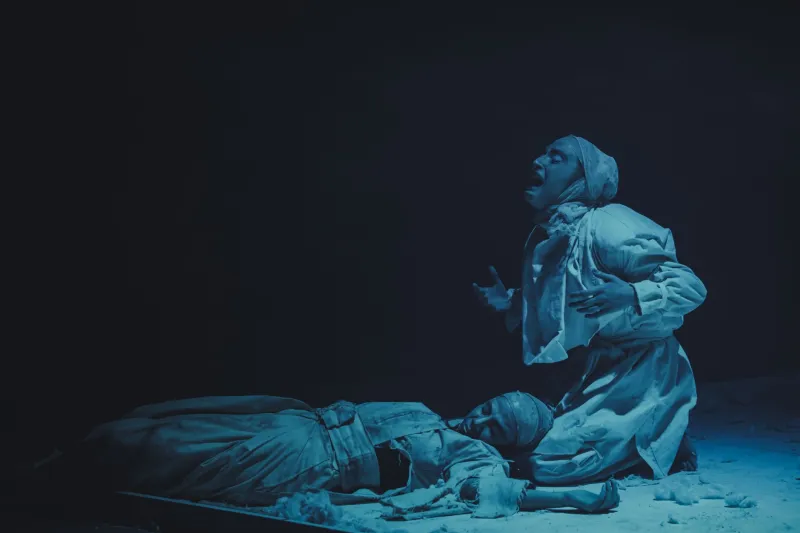
There's a moment in a lot of conventional theatre — you'll know it if you've sat through enough West End productions — where something goes slightly awry. A prop gets dropped. A line gets fluffed. The set wobbles. And the entire room holds its breath, waiting for order to be restored, for the smooth machinery of professional performance to reassert itself and pretend nothing happened.
Now imagine a theatre where that moment of wobble is the whole point. Where the dropped prop isn't a disaster to be smoothed over, but a doorway into something genuinely alive.
That's the territory a growing number of UK theatre companies are working in — and it's producing some of the most talked-about, most argued-about, most remembered nights out in contemporary British performance.
The Tyranny of the Flawless Production
Traditional theatre has a complicated relationship with perfection. Weeks of rehearsal, technical runs, dress rehearsals, previews — the entire architecture of conventional production is designed to sand away any rough edges before a paying audience sets foot in the building. The unspoken contract is: you give us your money, we give you a seamless experience.
But seamless, it turns out, can also mean airless.
"There's something deeply conservative about the idea that theatre has to work perfectly," says one Bristol-based director whose company has built an entire aesthetic around what she calls 'productive dysfunction'. "When everything goes to plan, you're basically watching a machine operate. Audiences can feel that. They're polite about it, but they're not moved by it. They're not in it."
Her recent show — a piece that involved three actors, a broken projector, and a script that was openly rewritten mid-performance based on what was and wasn't landing — sold out its run and spawned a waiting list for returns. The reviews were baffled, divisive, and utterly unable to stop talking about it. Which was, she'll tell you cheerfully, entirely the intention.
Failure as Vocabulary
It's worth being precise about what we mean when we talk about failure in this context, because there's a crucial difference between a show that's simply underprepared and one that uses the aesthetics of failure as a deliberate artistic language.
The companies doing the most interesting work here aren't just turning up and winging it. They're rigorously, painstakingly constructing experiences that feel like they might fall apart at any moment — and sometimes do. The failure is authored. The chaos is curated. The mess has a thesis.
London-based collective Tender Wreckage (not their real name — they prefer to keep a low profile, which feels very on-brand) have made a practice of staging shows where the ending is genuinely unknown to the performers until the night. Not improvised in the casual sense, but structured so that multiple possible conclusions exist, and which one emerges depends on variables the company can't fully control — audience energy, the weather, the specific chemistry of that particular group of strangers in a room together.
"We wanted to stop lying to audiences," one of the collective's founding members explains. "Every conventional show lies. It pretends that what you're watching is spontaneous, that these people are really feeling these feelings for the first time. We wanted to be honest about the fact that theatre is a construction — and then ask what happens when the construction starts to show its seams."
Why Audiences Are Responding
Here's the thing that surprises people when they first encounter this kind of work: it's not alienating. You might expect audiences to feel cheated when a show visibly struggles, or frustrated when it refuses to deliver a tidy resolution. Some do. But a striking number come away energised in a way that polished productions rarely manage.
Part of this is about presence. When a performance might genuinely go sideways at any moment, you cannot switch off. You cannot sit back and receive it passively. You are — whether you signed up for this or not — a participant in the live event of the thing either holding together or not holding together. That's a fundamentally different relationship to the work.
Part of it is also about trust. Counterintuitively, a company that's willing to show you its failures is often a company you trust more than one presenting an immaculate surface. There's a generosity in the vulnerability, a sense that you're being let into something real rather than being sold a product.
"People come up after shows and say things like 'I wasn't sure if I liked it, but I haven't stopped thinking about it,'" says a Manchester-based performer who works extensively in this mode. "That's actually the response I want. That's a show that's done its job. The ones where people say 'yes, lovely, very good' and then go for a Nando's and forget about it by Tuesday — those are the ones I find depressing."
The Critical Establishment Catches Up (Slowly)
The mainstream critical world has been, characteristically, a bit slow to know what to do with all this. Reviews of deliberately dysfunctional work often betray a reviewer's discomfort with the idea that they might be assessing something on the wrong terms entirely — that applying a framework of 'did it work?' to a show about not working is, at best, a category error.
But there are signs that the conversation is shifting. Edinburgh Fringe has seen a notable uptick in work that foregrounds its own construction and deconstruction. Several of the most-discussed shows of recent years have been pieces that explicitly refused to deliver on conventional theatrical promises — and the audiences queuing around the block to see them suggest this isn't a niche taste anymore.
What This Means for the Rest of Us
If you've been raised on theatre that promises and delivers a complete, polished experience, walking into a show that wears its failures openly can feel disorienting. That's normal. That's actually part of what makes it interesting.
The companies doing this work aren't asking you to lower your standards. They're asking you to question what your standards are for — whether the smoothness you've been taught to expect from theatre is actually serving you, or whether it's just a habit of comfort that's been keeping you at a safe distance from something much stranger and more alive.
Britain's experimental theatre scene has always been at its best when it refuses to behave. Right now, the most exciting companies in the country are taking that refusal to its logical conclusion: not just refusing to behave, but refusing to succeed. And the results are, gloriously, a mess worth watching.