No Stage, No Problem: Why the Best Theatre in Britain Is Happening in Car Parks and Chip Shops
There's a particular smell to a working launderette. Warm fabric softener, damp concrete, the faint electrical hum of machines doing their thing regardless of whether anyone's watching. It's not, by any conventional measure, a theatrical atmosphere. And yet, if you happened to wander into a certain South London launderette on a Tuesday evening last spring, you'd have found yourself accidentally — and then very deliberately — in the middle of a forty-minute performance about grief, migration, and the strange intimacy of doing your washing in public.
You weren't asked to sit down. There wasn't anywhere to sit down. You just... stayed.
This is the accidental audience. And it's becoming one of the most compelling phenomena in British experimental theatre.
It's Not About Cheap Rent (It's Really Not)
The easy assumption is that companies staging work in car parks and shuttered Debenhams units are doing so because they can't afford a proper venue. That narrative is not only wrong — it's actively missing the point. The most interesting companies working in found and unconventional spaces aren't there out of necessity. They're there because the space does something that no theatre building can replicate.
Take the work of companies like Punchdrunk, who've been doing this for years in warehouse spaces across London, or the more recently formed collectives operating out of former post offices in Leeds and decommissioned swimming pools in Bristol. The building isn't a backdrop. It's a collaborator.
"When you put an audience in a theatre, they already know how to behave," says one artistic director whose company staged a production about domestic violence inside a functioning laundrette in Peckham. "They know where to look, when to clap, when to stay quiet. That knowledge is actually a massive problem for us. We needed people to not know what was expected of them."
That disorientation — the slight wobble of walking into a space and not being entirely sure what's performance and what isn't — turns out to be extraordinarily fertile ground for theatre that wants to say something difficult.
The Space Talks Back
Conventional theatre architecture is, when you think about it, a set of instructions. The raised stage says: look here. The raked seating says: stay there. The darkness says: this is where reality ends. Every one of those instructions is a form of control, and for a lot of experimental work, that control is the enemy.
When you stage something in an abandoned retail unit on a high street, those instructions disappear entirely. Pedestrians glance in through the window. A bus rumbles past at a dramatically inconvenient moment. The smell of the space — damp plaster, old carpet glue, the ghost of a thousand Saturday shoppers — becomes part of the texture of the work whether you planned it or not.
Some companies are not only accepting these interruptions but actively designing for them. One Edinburgh-based collective recently staged a promenade piece through a working multi-storey car park in the city centre, timed so that the audience moved through levels as actual drivers came and went. The cars weren't props. The drivers weren't actors. The collision between the two realities was, by all accounts, frequently more affecting than anything scripted.
"We had a woman pull up on level three," the director recalled, "and she just sat in her car watching one of our performers for about four minutes before driving off. She had no idea what she was seeing. We had no idea who she was. That exchange was worth more than anything I could have written."
What Gets Left Behind
Honesty requires acknowledging what you lose when you abandon the theatre building. Acoustics, for a start — outdoor and unconventional spaces are brutal on spoken text, which is partly why so much site-specific work leans heavily on physical performance, sound design, or extreme proximity between performer and audience. You also lose the social contract of the theatre ticket, that implicit agreement that everyone present has chosen to be there and understands (roughly) what's about to happen.
The accidental audience — the genuine one, the person who walked into the launderette to do their actual washing — is a thrilling concept right up until that person is distressed, confused, or simply furious that their Tuesday evening routine has been disrupted by a woman in a raincoat delivering a monologue about her dead mother.
Ethics matter here, and the best companies take them seriously. Clear signage, easy exit routes, performers trained to read the room and adapt — these aren't just practical considerations, they're part of the artistic integrity of the work. Ambushing people isn't the same as surprising them.
The High Street as Stage
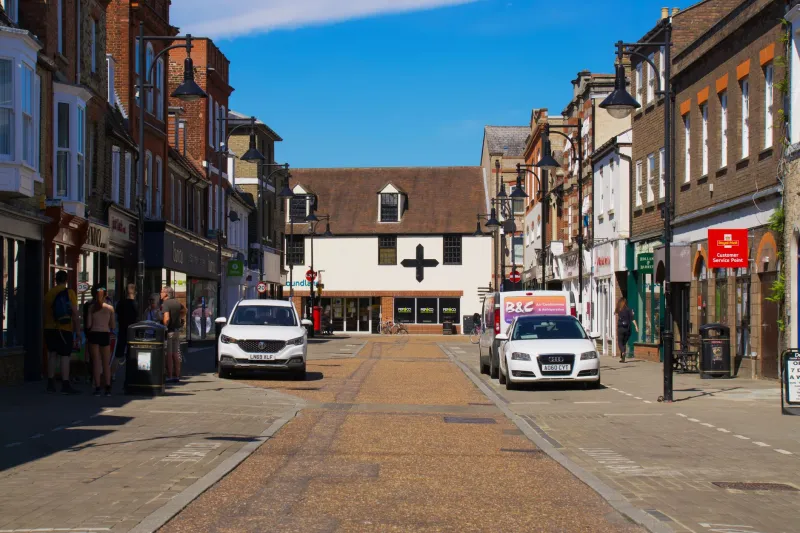
There's also something politically resonant about theatre colonising the spaces that late-stage capitalism has left behind. Britain's high streets are pockmarked with empty units, shuttered pubs, and retail spaces that have been hollowed out by a decade of austerity and the slow gravitational pull of online shopping. Putting performance into those spaces is, whether you intend it or not, a statement about what those spaces could be — about the kind of cultural life that gets squeezed out when communities lose their gathering places.
Several companies working in this space are explicit about the political dimension. A Manchester-based company recently staged a series of short works in empty shops across the Northern Quarter, deliberately choosing units that had been vacant for more than two years. "We wanted people to walk past and think: why is there theatre here and not a coffee shop?" their producer explained. "And then we wanted them to think: actually, which of those things do we need more?"
Why This Matters for British Theatre
British theatre has a complicated relationship with accessibility. We talk about it endlessly — outreach programmes, community engagement, subsidised tickets — while continuing to produce most of our most ambitious work in buildings that a significant chunk of the population finds intimidating, irrelevant, or simply geographically inconvenient.
Taking theatre into the spaces where people already are — not as a condescending gesture, but as a genuine artistic choice that produces better, stranger, more alive work — cuts through a lot of that. You don't have to decide to go to the theatre if the theatre comes to you. You don't have to know the rules if there aren't any.
The launderette. The car park. The chip shop on a Friday night. These aren't compromises. They're invitations. And right now, they're producing some of the most vital theatre this country has to offer.