Uninvited, Unmissable: The Artists Turning Britain's Streets Into a Stage

Photo by Photo by Barney Goodman on Unsplash on Unsplash
Somewhere in Birmingham New Street station, a woman in a business suit has stopped walking. She was heading for the 17:42 to Wolverhampton. She is no longer heading for the 17:42 to Wolverhampton. She is watching two people have an argument that doesn't quite sound like a real argument — the rhythms are too precise, the pauses too deliberate — and she can't decide whether to intervene or keep moving.
This is exactly what the artists want.
The Building Is Not the Point
British theatre has a complicated relationship with its own gatekeeping. The building — the box office, the bar, the programme, the seat number — implies that theatre is something you attend, something you book in advance, something that happens in designated spaces to people who have specifically opted in.
For a significant and growing contingent of UK performance-makers, that model is not just limiting. It's a political problem. If theatre only happens to people who already go to theatre, then it's not really doing what theatre is supposed to do — which is to put human experience in front of human beings and make them feel something about it.
Guerrilla theatre — performances that erupt in public spaces without (always) asking anyone's permission — is the most direct possible answer to that problem. No box office. No bar. No seat number. Just people going about their day and suddenly, unexpectedly, finding themselves inside a story.
What Counts as Guerrilla?
The term covers a genuinely wide spectrum. At one end, you have fully unauthorised interventions — performances that happen in public spaces without any engagement with authorities, designed to be ambiguous enough that they can't easily be stopped before they're over. At the other, you have work that's negotiated carefully with councils, transport operators, and landowners, occupying a legal grey area that's been painstakingly navigated.
In between sits most of the interesting work.
Train stations are a favourite location, partly because the dramaturgy is already there — arrivals, departures, reunions, goodbyes, the particular loneliness of a crowd of strangers all going somewhere different. Performers can work with those conditions rather than against them. A scene about separation lands differently when real people around you are actually separating, actually leaving.
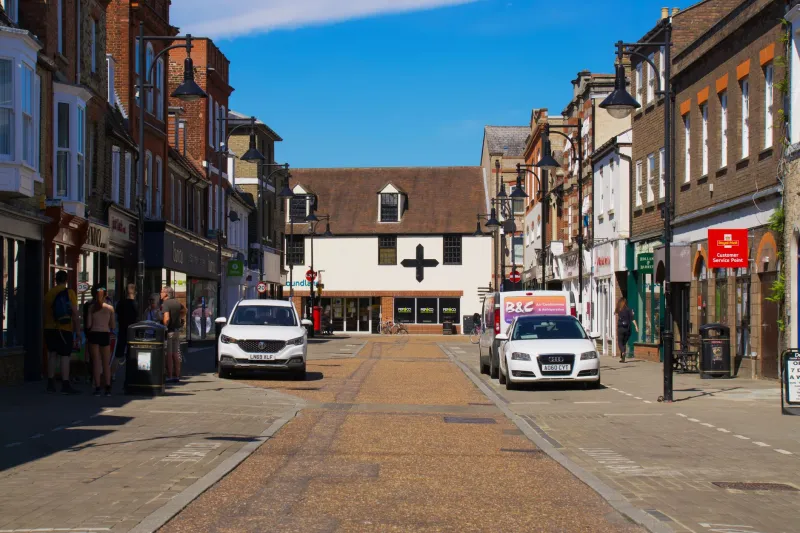
Shopping centres, market squares, underpasses, parks, protest lines — each space comes with its own ambient meaning, its own population, its own rhythms. The best site-specific and guerrilla work reads those conditions and responds to them, making the location itself part of what the piece is saying.
The Council Question
Here's where things get complicated. Local councils across the UK have become increasingly attentive to unauthorised public performance — partly for genuine public safety reasons, partly because some have a reflexive suspicion of anything that disrupts the smooth operation of commercial space.
In practice, what this means is that artists working in this mode spend a significant amount of their creative energy on logistics that have nothing to do with the work itself. What counts as a performance versus a conversation? How many people can gather before it becomes a public assembly requiring permission? Which bits of a town centre are genuinely public and which are privately owned land that happens to feel public?
The answers vary wildly by location and by who happens to be on duty that day. Some companies have developed sophisticated approaches to working in this ambiguity — keeping groups small, keeping the action mobile, building in contingency plans for when they're moved on. Being moved on, some argue, has itself become part of the performance. The arrival of a security guard or a community support officer asking what's going on is a live piece of civic theatre in its own right.
Other local authorities have moved in the opposite direction, establishing proper frameworks for artists to use public space — not always enthusiastically, but recognising that some of the most vital cultural activity in their areas is happening outside traditional venues. Bristol, Manchester, and parts of inner London have developed relatively permissive approaches; others remain considerably more hostile.
Reaching the Unconverted
The honest question for any theatre company working in public space is: who's actually watching?
The risk with any experimental or alternative arts practice is that it develops its own audience — self-selecting, already sympathetic, already converted. Guerrilla theatre in public space at least structurally disrupts that tendency. You can't self-select into an audience you didn't know existed.
The person watching the argument at Birmingham New Street wasn't looking for theatre. She was looking for her platform. The performance found her, not the other way around. That's a genuinely different relationship to the work — more surprised, less prepared, in some ways more open.
Practitioners in this space talk about the quality of attention they get from accidental audiences versus intentional ones. There's something rawer about watching someone who hasn't decided to engage, who is making that decision in real time, who hasn't brought any pre-existing framework for what they're supposed to feel.
The Ethics of the Ambush
Not everyone loves being surprised by theatre. It's worth acknowledging that. Public performance without explicit consent is an imposition, however benign the intentions. Some people are in the middle of something important. Some people are already overwhelmed. Some people just wanted to get their train.
The companies doing this most thoughtfully build in exit routes — not physical ones, but social ones. Work that's clearly bounded, that doesn't follow people, that makes its own artificiality legible enough that anyone who doesn't want to be part of it can simply keep walking without feeling they've done something wrong.
The ambush, when it's done well, is an invitation. Not a demand.
Why This Matters Now
There's a particular urgency to the question of where theatre happens right now. Town centres are changing. Public space is contracting. The places where people from different backgrounds actually share physical space are becoming fewer and more contested.
Theatre that insists on occupying those spaces — that refuses to retreat behind a box office and a bar — is making an argument about what public life is for. It's saying that culture isn't a leisure option for people with the time and money and inclination to seek it out. It's something that belongs in the middle of the street, in the station concourse, in the market square.
When the woman in Birmingham finally missed her train because she stayed to watch what happened at the end of the scene, she didn't feel ambushed. She felt like something had been given to her unexpectedly.
That's the whole project, really. Theatre turning up where it wasn't invited, and being impossible to ignore.