One Star and Proud: How British Experimental Theatre Turned Bad Reviews Into Battle Cries
There's a particular kind of silence that falls over a theatre company when a review drops and it's absolutely savage. You know the type — not the measured disappointment of two stars, but the full-throttle, italics-and-everything demolition job. The kind where the critic describes the experience as "an endurance test dressed as art" or "seventy minutes I will never retrieve from the wreckage of my evening."
For most productions, that's a catastrophe. For a growing number of Britain's experimental companies, it's practically a marketing strategy.
The Badge Nobody Asked For (But Everyone Wants)
It sounds counterintuitive, and that's sort of the point. Theatre that genuinely unsettles people — that refuses the comforting arc of conventional narrative, that puts audiences somewhere genuinely uncomfortable — tends to generate responses at both extremes. The middle ground, that polite three-star shrug, is arguably the worst outcome of all. It means you've made something that everyone can tolerate, which in experimental theatre is roughly equivalent to making something no one will remember.
Directors working at the rougher edges of British performance have started talking openly about what you might call the walkout metric. If nobody leaves, did you really push anything? If every critic gives you a reasonable write-up, did you actually challenge anything? The logic is uncomfortable, but it's not entirely wrong.
One director based in Manchester — whose company has accumulated a genuinely impressive collection of hostile notices over the past six years — put it to us this way: "A one-star review from a certain kind of critic is a five-star recommendation for a certain kind of audience. Those two things aren't in conflict. They're describing exactly the same show from completely different starting points."
Critics in the Crosshairs
This creates a genuinely strange situation for theatre criticism in Britain right now. The traditional review operates on the assumption of shared aesthetic values — that there's a common framework within which a production can be assessed as more or less successful. Experimental theatre, almost by definition, rejects that framework. It's not playing the same game. So what exactly is a critic measuring when they assess it?
Some critics have become remarkably self-aware about this problem. There's an acknowledgement, at least in more thoughtful corners of the arts press, that reviewing work which deliberately resists conventional assessment requires a different set of tools. The question isn't whether the piece succeeded at what theatre traditionally does. The question is what it was actually trying to do — and whether your personal discomfort is a failure of the work or evidence that it's functioning exactly as intended.
This isn't a get-out-of-jail-free card for lazy or incoherent work, and it's worth saying that clearly. Not every baffling piece of theatre is baffling because it's brave. Sometimes things are just a mess. The difference matters, and the best critics — and the best audiences — can usually feel it, even when they can't fully articulate why.
But the genuinely interesting conversation happening right now is about the gap between critical consensus and audience experience in experimental spaces. A show can be widely panned and simultaneously generate some of the most intense, lasting responses any of its audience members have ever had in a theatre. Those realities can coexist. They do coexist, regularly.
When Hostility Becomes the Work
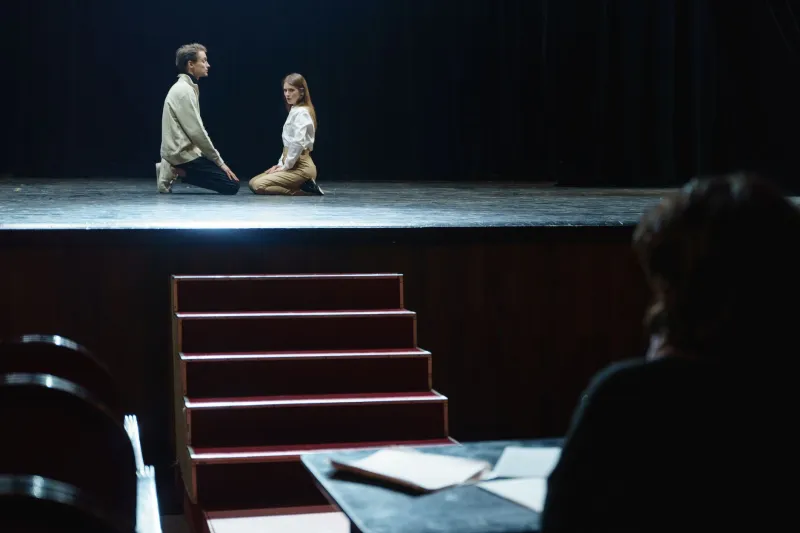
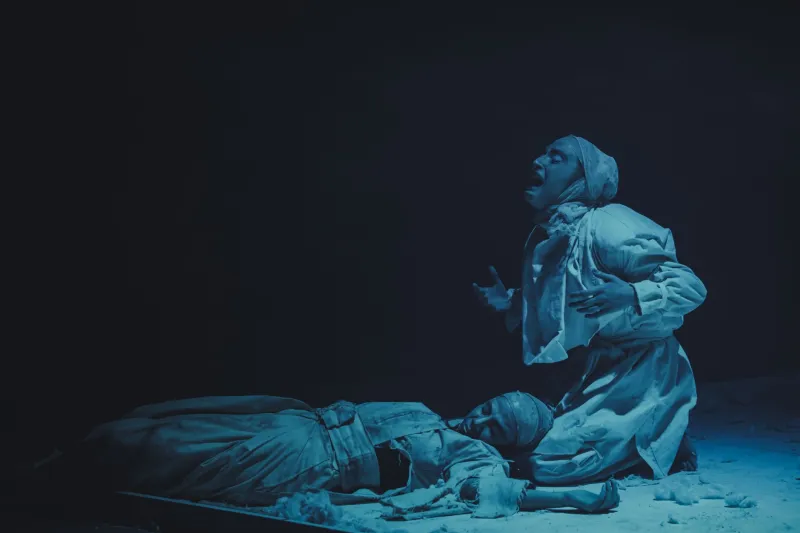
Some companies have gone further than simply tolerating negative responses — they've started actively building them into the dramaturgy. Work that's designed to be walked out of. Performances that contain moments specifically calibrated to lose a portion of the room. Productions where the discomfort of the critical establishment is part of what the piece is arguing.
There's a lineage here, obviously. The history of experimental performance in Britain is littered with scandals, bans, protests, and reviews so outraged they read now like unintentional comedy. What feels different at the moment is the self-consciousness of it — companies that understand the mechanics of provocation well enough to deploy them deliberately, rather than simply stumbling into controversy and deciding to own it afterwards.
The Traverse in Edinburgh, the Bush in London, smaller venues across Bristol, Leeds, and Birmingham — the spaces where this work tends to live are increasingly comfortable with the idea that their programming will alienate some people. That's not indifference to audience. It's a particular kind of respect: the belief that the audience can handle a genuine challenge, and that a theatre which never asks more than you're comfortable giving isn't really a theatre worth your time.
The Audience as Co-Conspirator
What's striking, when you talk to people who regularly seek out this kind of work, is how much the hostile review functions as a recommendation system. The experimental theatre audience — and it is an audience, a real and growing one — has learned to read between the lines of mainstream criticism. A notice that describes a show as "wilfully obscure" or "aggressively uncommercial" or "the sort of thing that gives theatre a bad name" is, for the right reader, an invitation.
Social media has accelerated this dynamic considerably. A clip of a walkout, a screenshot of a particularly apoplectic review, a thread of people arguing about whether something was art or provocation or both — these spread through exactly the communities most likely to want to see the work. The controversy becomes the trailer. The bad review becomes the pitch.
None of this means that experimental companies have cracked the funding problem, or that hostile notices don't sting, or that there isn't real damage done when work is misrepresented or simply dismissed without engagement. The economics of independent theatre in Britain remain brutal, and a bad review in the wrong publication at the wrong moment can genuinely hurt a company that's already operating on the financial edge.
Refusing the Safe Harbour
But there's something genuinely energising about the current moment, precisely because the old consensus about what theatre should do and how it should be judged is under real pressure. The companies refusing to chase approval — refusing to sand down the edges to make the notices easier — are, in a strange way, the ones keeping the form alive.
The one-star review, framed and hung in the foyer, is a kind of manifesto. It says: we knew this might happen, we made it anyway, and we'd make it again. That's not arrogance. That's conviction. And in a cultural landscape that often rewards the safe and the familiar, conviction — even the inconvenient, unsettling, walk-out-at-the-interval kind — is worth something.
Probably worth more than three stars and a quiet life.